
Published:

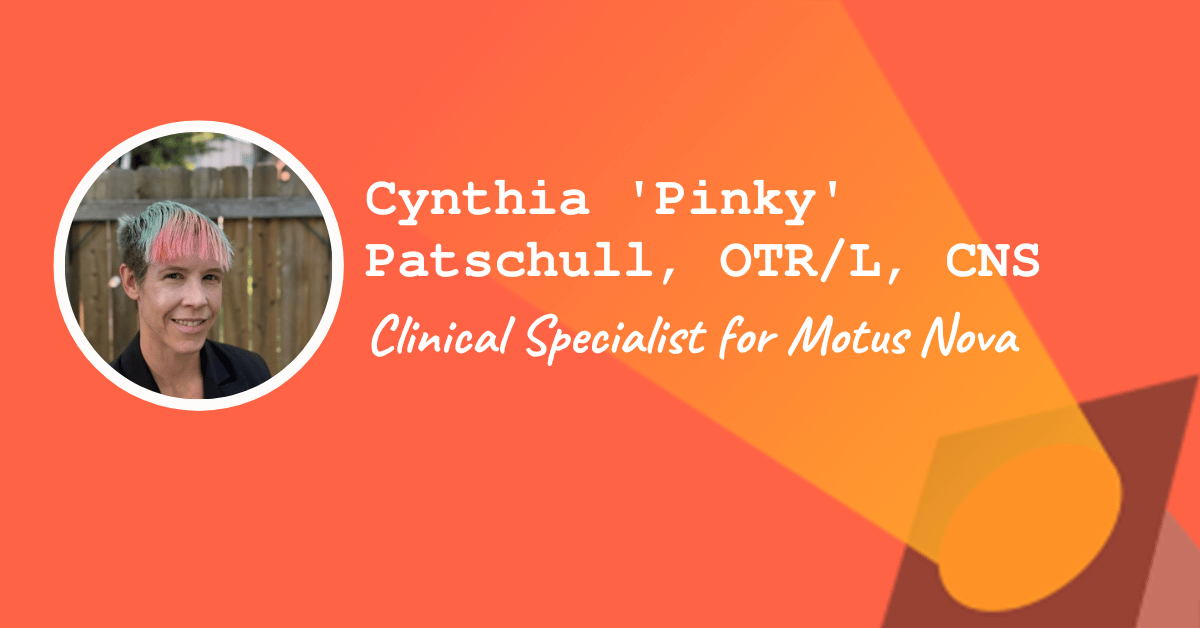
Cynthia ‘Pinky’ Patschull, OTR/L, CNS, is a Clinical Specialist for Motus Nova, which builds robotic hand and foot devices so stroke and neurological-injury survivors can keep working on recovery at home, months or even years after the injury itself. The devices ship straight to patients on subscription, and most major insurance, Medicare included, covers them.
Pinky’s job is part matchmaker, part translator: winning over the patients who’ll use the device, and the therapists deciding whether to recommend it. She’s a non-clinical occupational therapist working as a Clinical Specialist, a title you’ll also find at places like Bioness and Medtronic, and she still keeps a foot in direct patient care with PRN shifts on the side.
Motus Nova is a hiring partner of Go Non-Clinical, so you can join the private community to chat with their hiring managers and see their open roles on the Go Non-Clinical job board, alongside their own careers page.
This post may contain affiliate links or codes. This won’t increase your cost, but it helps keep TNCPT alive, and free of annoying ads! Thank you for your support. 🙂
What is your full name, title, and company name for your current, primary role?
Cynthia ‘Pinky’ Patschull, OTR/L, CNS — Clinical Specialist for Motus Nova and PRN clinician at two inpatient rehabs
Where are you located?
Denver, CO and surrounding areas.
Where did you go to OT school, and what year did you graduate?
Texas Woman’s University, 2020.
What did you do when you first finished school, and for how long?
I immediately got hired and started working as an OT. I moved from Texas to Colorado.
In what setting(s) did you work, and what types of patients did you treat?
I worked in a skilled nursing home setting for a year, then in acute care for several years, then inpatient rehab, then outpatient neuro.
What did you enjoy about your early roles? What didn’t you enjoy?
There was anxiety because I was not sure what I was doing, but I wanted to help patients, so I did not enjoy the anxiety I got in the first year. But I really enjoyed working with patients, and helping them overcome injuries, illness, and disease was incredibly rewarding.
When and why did you decide to do something non-clinical?
I began working with rehabilitation technology, including Vivistim, in my neuro outpatient role because I saw a major gap in how much therapy many of my patients could actually access. Some patients exhausted their therapy visits well before the end of the year, and I would watch them lose progress once therapy ended.
I wanted to find ways to help patients continue working toward their goals outside of traditional therapy sessions. While working with Vivistim, I discovered Motus Nova and began using the technology with my patients. I really liked the technology and, more importantly, I saw how it could help people continue practicing movement and working toward functional recovery beyond the limitations of their therapy schedule.
The more I worked with Motus Nova, the more I believed in the potential of rehabilitation technology to bridge that gap. Eventually, I decided I wanted to be part of the company and help bring this technology to more patients and clinicians, which led me to apply to Motus Nova.
What are you doing these days?
I am a mom, a Clinical Specialist for Motus Nova, and I still PRN at two inpatient rehabs.
Are you still treating patients, or are you solely non-clinical?
I am still treating patients clinically.
How long have you been in your current Clinical Specialist role?
November 2025–present.
Did you get any special certifications or training along the way to help you get into your current role?
My Certified Neuro Specialty (CNS) helped me land the Motus Nova role.
How did you find your job? Did you apply or find it through a connection?
Indeed.
How have people reacted to you leaving patient care?
It still feels like I give patient care. I go and see patients and assess how they respond to Motus Nova, and then I do follow-up visits as needed in their homes to ensure success. I have a lot of fun going to the different rehabs because I get to see old coworkers and make new friends as well. I have a growing network of therapists I am friends with!
What’s a typical day or week in the life like for you? What types of tasks and responsibilities fill your time?
A typical week includes:
- Demoing with patients so they can use Motus Nova
- Scheduling in-services with new therapy sites
- A lot of emailing and texting therapists and DORs
- Going to conferences as a vendor
- Joining community events for MS, Parkinson’s, stroke, and other conditions
- Participating in a marketing group of healthcare professionals
- Occasionally doing drop-ins at clinics to promote Motus Nova
What are some of the rewards of your Clinical Specialist role? What are the biggest challenges?
Making a difference in people’s lives. For instance, I worked with a woman who hadn’t moved her arm in two years after a stroke.
She used Motus Hand for 20 minutes and then moved her hand!
She maintained that movement the entire session and, as far as I know, can still move her hand!
Biggest challenge is getting all the insurances to approve. It is a disappointment when we cannot get insurance approval. Kaiser is particularly tricky and very difficult to communicate with. However, Motus Nova does offer two months free to any clinical referral who is not able to have it approved through insurance.
How did your clinical background prepare you for this role? Which skills transferred?
My clinical background, particularly my experience working with the neurological population, prepared me very well for this role. As an occupational therapist, I developed a strong understanding of neurological recovery, neuroplasticity, motor learning, and the challenges patients face when trying to regain function after a neurological injury or diagnosis. That clinical experience allows me to understand not only how the technology works, but also which patients may benefit from it and how to connect the technology to meaningful functional goals.
One of the biggest skills that transferred to this role is my ability to educate. Throughout my career, I have worked with patients, families, caregivers, and other healthcare professionals, often taking complex clinical concepts and explaining them in a way that is understandable and relevant to the individual. I use that same skill when educating clinicians about Motus Nova and helping them understand how the technology can fit into their patients’ rehabilitation programs.
I also bring strong clinical reasoning and problem-solving skills. In outpatient neuro, every patient was different, and I learned to look at the whole person, identify barriers to progress, and determine how to adapt treatment to help them reach their goals. That mindset translates directly into working with clinicians and patients to determine how Motus Nova can be incorporated into their care.
Finally, my clinical background taught me how important relationships are. Recovery can be frustrating and slow, so building trust, listening to patients and clinicians, and meeting people where they are is essential. I think that combination of neurological knowledge, education, clinical reasoning, communication, and relationship-building has been extremely valuable in my transition from clinician to rehabilitation technology specialist.
What type of person do you think would do well in your Clinical Specialist role?
I think someone who is comfortable working with all different types of people would do well in this role. You need to be personable, approachable, and able to build relationships with patients, clinicians, caregivers, and coworkers. Every person communicates differently, so being able to meet people where they are is really important.
You also need to have thick skin. There are going to be challenging conversations, setbacks, people who are frustrated, and situations that don’t always go the way you hoped. Being able to stay positive, learn from those experiences, and keep moving forward is important.
Organization is another big one. There is a huge amount of information to manage when you’re working with so many different patients, clinicians, referrals, trials, and follow-ups. I would say organization is something I am always working to improve myself because there is simply so much to keep track of.
Overall, I think the right person needs to be personable, resilient, adaptable, organized, good time management, and genuinely enjoy helping people.
You have to be able to wear a lot of different hats in this role, sometimes all in the same day!
Do you work remotely or onsite?
I am hybrid, but lately I have been in the field 90% of the time. However, I am trying to decrease that slightly so I have more time to catch up on my admin duties.
Did you read any books, take any courses, or do anything special overall to get you where you are today?
I take Medbridge courses, and I am reading Stroke Recovery and Brain Repair by Keith Pruitt. Motus Nova also has all of their clinical studies listed on their website, which I have read through as well.
What is next for you? What are your high-level career aspirations?
I am taking it one day at a time. Right now I am having a lot of fun in my role as Clinical Specialist with Motus Nova.
What to read next
- Senior Clinical Specialist at Motus Nova — Juan Buenrostro — the senior version of her role, same employer, a different territory.
- The Non-Clinical Jobs Report, from Go Non-Clinical — the most recent numbers on the broader non-clinical hiring market (Q2 2026).
- What hiring managers look for in a clinician’s first non-clinical interview — the questions to expect, from the people who ask them.
- How to write your first non-clinical resume — turning years of clinical experience into a resume that lands with a non-clinical hiring manager.
More resources for your non-clinical career
If you’re finding your own way through the non-clinical transition, we’ve created these FREE resources to help you get your bearings.
- Our weekly jobs newsletter: 100+ fresh non-clinical job postings every week, plus new spotlights, our latest articles, and hiring partners recruiting straight from our community.
- Four Secrets to Landing a Fulfilling Non-Clinical Healthcare Job: our free mini-course, delivered to your inbox.
- Our free career quiz: 15 questions, and you’ll come out with a much clearer picture of which non-clinical sectors suit you.
If you’d rather follow a step-by-step roadmap than piece this together on your own, that’s exactly why we made Non-Clinical 101. It’s our course & community teaching rehab pros how to make the switch in half the time with twice the confidence.
